Comparison of the perioperative analgesic effect of epidural and intravenous morphine hydrochloride in bitches undergoing elective ovariohysterectomy
Keywords:
morphine hydrochloride, epidural analgesia, caninesAbstract
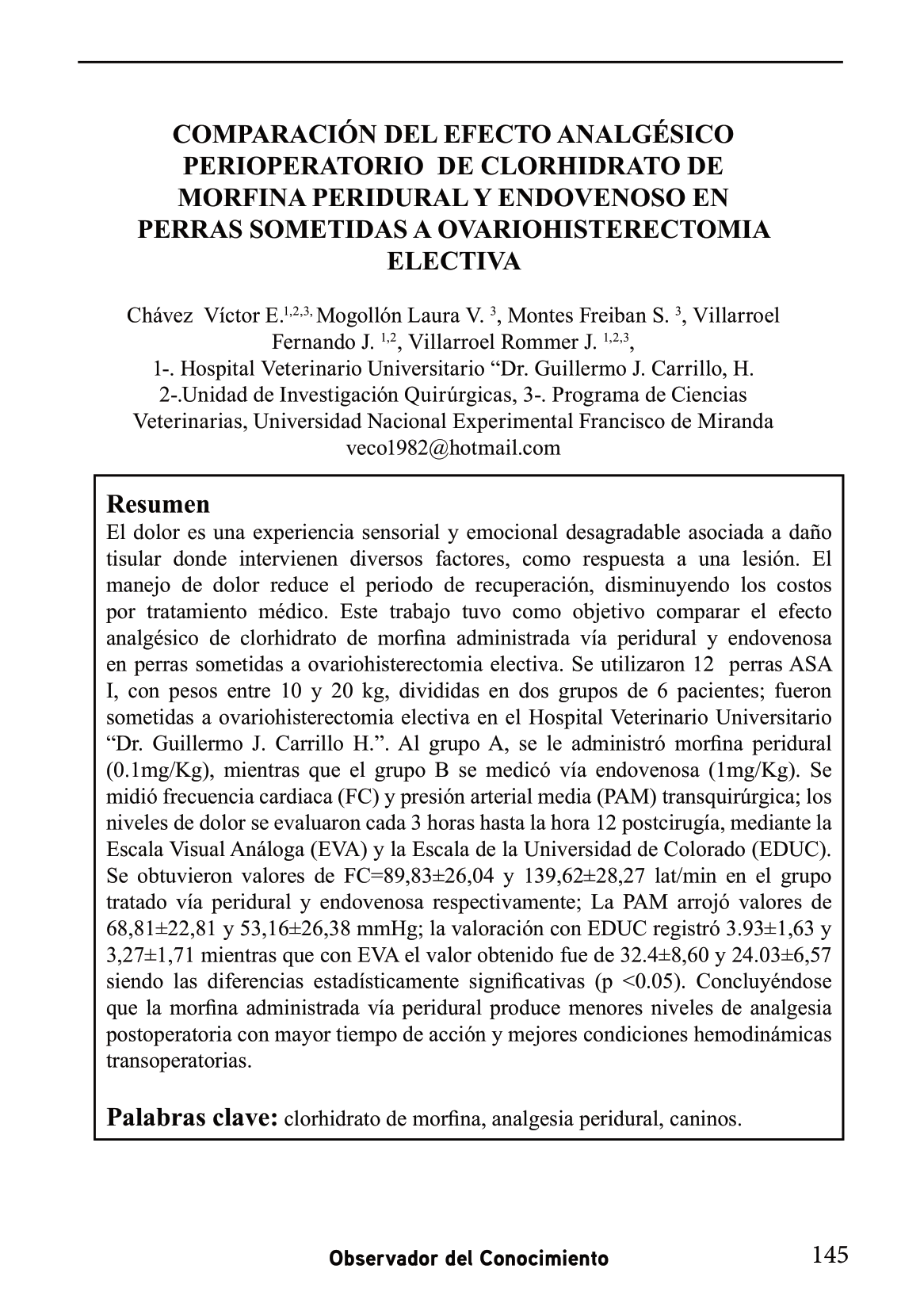
Pain is an unpleasant sensory and emotional experience associated with tissue damage involving various factors, as a response to injury. Pain management reduces the recovery period, decreasing medical treatment costs. This study aimed to compare the analgesic effect of morphine hydrochloride administered epidurally and intravenously in bitches undergoing elective ovariohysterectomy. Twelve ASA I bitches, weighing between 10 and 20 kg, were divided into two groups of six patients; they underwent elective ovariohysterectomy at the “Dr. Guillermo J. Carrillo H.” University Veterinary Hospital. Group A received epidural morphine (0.1 mg/kg), while group B received intravenous morphine (1 mg/kg). Heart rate (HR) and mean arterial pressure (MAP) were measured intraoperatively. Pain levels were assessed every 3 hours until 12 hours post-surgery using the Visual Analog Scale (VAS) and the Colorado State University Pain Scale (CSU). Heart rate (HR) values of 89.83 ± 26.04 and 139.62 ± 28.27 bpm were obtained in the epidural and intravenous treatment groups, respectively. Mean arterial pressure (MAP) values were 68.81 ± 22.81 and 53.16 ± 26.38 mmHg. The CSU scores were 3.93 ± 1.63 and 3.27 ± 1.71, while the VAS scores were 32.4 ± 8.60 and 24.03 ± 6.57, respectively. These differences were statistically significant (p < 0.05). It was concluded that morphine administered via epidural route produces lower levels of postoperative analgesia with a longer duration of action and better intraoperative hemodynamic conditions.